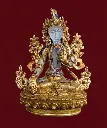
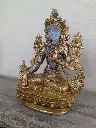
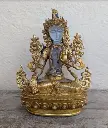
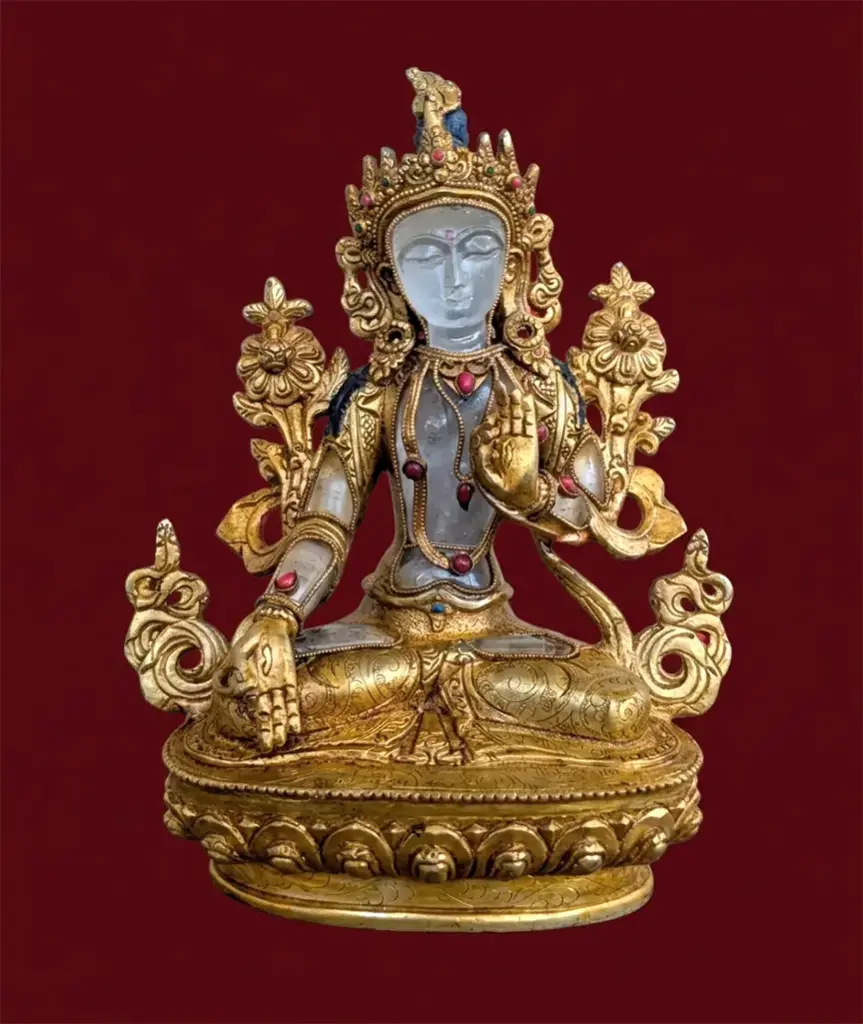
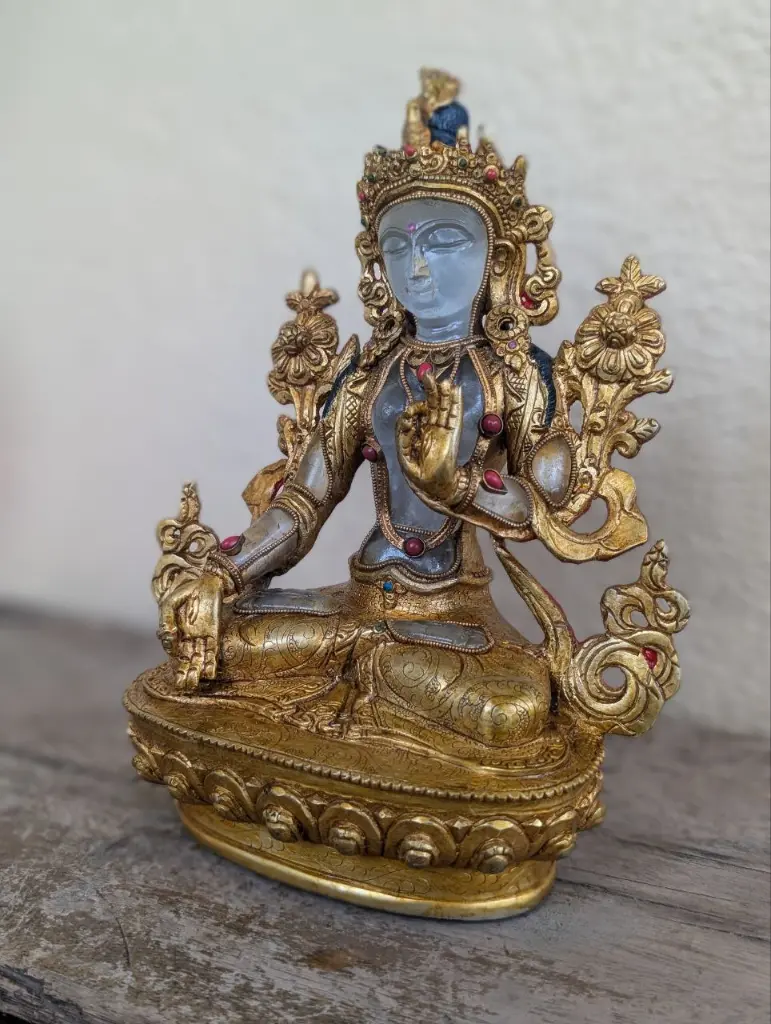
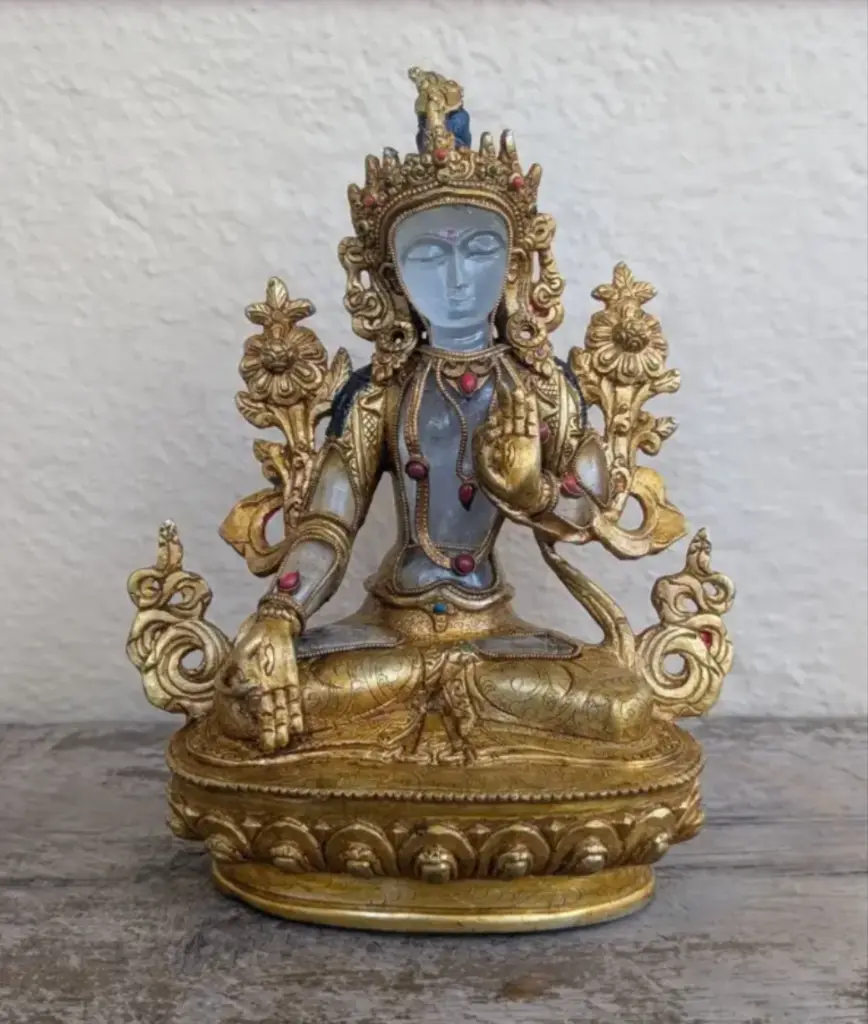
White Tara (Drolkar) is a revered female Buddha who embodies compassion, healing, and longevity. She is often depicted with seven eyes (three on her face, one on each palm, and one on each sole of her feet), symbolizing her compassionate vigilance to perceive and alleviate the suffering of all beings. Her pristine white color represents purity, wisdom, and truth.
Practitioners invoke White Tara to:
- Promote long life and good health: She is particularly associated with practices for extending life, healing illnesses, and overcoming obstacles to well-being.
- Enhance wisdom and spiritual growth: Her blessings help to clear mental obscurations and foster inner clarity.
- Cultivate peace and fearlessness: She offers protection from fears and dangers, bringing a sense of calm and security.
- Develop compassionate activity: Meditating on White Tara can inspire and strengthen one's own capacity for selfless compassion.
The principal and most common mantra for Tara is:
OM TARE TUTTARE TURE SVĀHĀ
- OM: The sacred primordial sound, representing the body, speech, and mind of a Buddha.
- TARE: Represents liberation from suffering and samsara.
- TUTTARE: Represents liberation from all fears, especially the eight great fears (e.g., fear of pride, delusion, anger).
- TURE: Represents liberation from all diseases and is associated with swift action and removing obstacles.
- SVĀHĀ: "So be it," "May it be so," or "May the blessings of the mantra be rooted in my mind."